Multifactor Authentication (MFA)
Safebucket supports TOTP-based multifactor authentication to add an extra layer of security to user accounts. Users can enroll authenticator apps such as Google Authenticator, Authy, or 1Password to generate time-based one-time passwords. MFA works across all authentication providers (local, OIDC, and LDAP) and can be enforced per provider.
Configuration
Encryption Key and Token Expiry
These application-wide settings control how MFA secrets are encrypted and how long the various tokens live.
Environment Variables
| Variable | Description | Default | Required | Valid Values |
|---|---|---|---|---|
APP__MFA_ENCRYPTION_KEY | 32-character encryption key for MFA secrets | - | ✅ | Exactly 32 characters |
APP__MFA_TOKEN_EXPIRY | MFA token expiry in minutes | 5 | ❌ | 1-30 |
APP__ACCESS_TOKEN_EXPIRY | Access token expiry in minutes | 60 | ❌ | 1-1440 |
APP__REFRESH_TOKEN_EXPIRY | Refresh token expiry in minutes | 600 | ❌ | 1-720 |
app:
  mfa_encryption_key: your-32-byte-encryption-key
  mfa_token_expiry: 5
  access_token_expiry: 60
  refresh_token_expiry: 600
APP__MFA_ENCRYPTION_KEY must be exactly 32 bytes. Keep this key
safe, losing it will invalidate all enrolled MFA devices.
Enable MFA per Provider
MFA enforcement is configured per authentication provider using the
mfa_required flag. When set on a provider, every user who authenticates
through that provider must complete MFA verification after login before
accessing any resources.
Environment Variables
# Require MFA for users authenticating with the "local" provider
AUTH__PROVIDERS__LOCAL__MFA_REQUIRED=true
YAML Configuration
auth:
  providers:
    local:
      type: local
      mfa_required: true
    myldap:
      type: ldap
      mfa_required: true
The application-wide app.mfa_required setting is deprecated. On startup, if it
is set to true, it is automatically applied to your local providers
(type: local). Set mfa_required directly on each provider instead.
How It Works
Authentication Flow with MFA
- A user logs in through their provider (local password, OIDC, or LDAP)
- If the provider has
mfa_required: trueor the user has enrolled MFA devices, a restricted MFA token is issued instead of a full access token - The user provides a 6-digit TOTP code from their authenticator app
- After successful verification, a full access token is issued
Optional vs Required MFA
mfa_required: false(default): Users can optionally enroll MFA devices. If they have enrolled devices, MFA verification is required at login. Users without devices skip MFA.mfa_required: true: All users on that provider must complete MFA verification. Users without enrolled devices will be prompted to set up a device before they can access the application.
Enrolling a Device
After logging in with MFA enabled, you are prompted to set up a TOTP device.
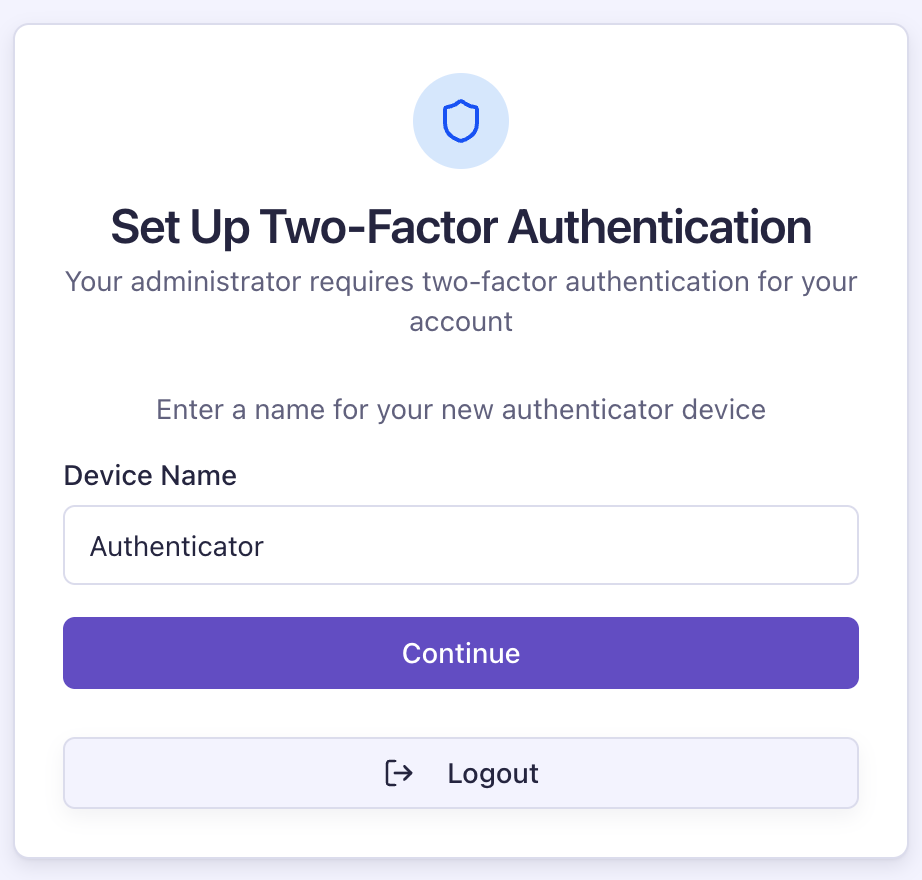
1. Name your device
Enter a name for the device (defaults to "authenticator").
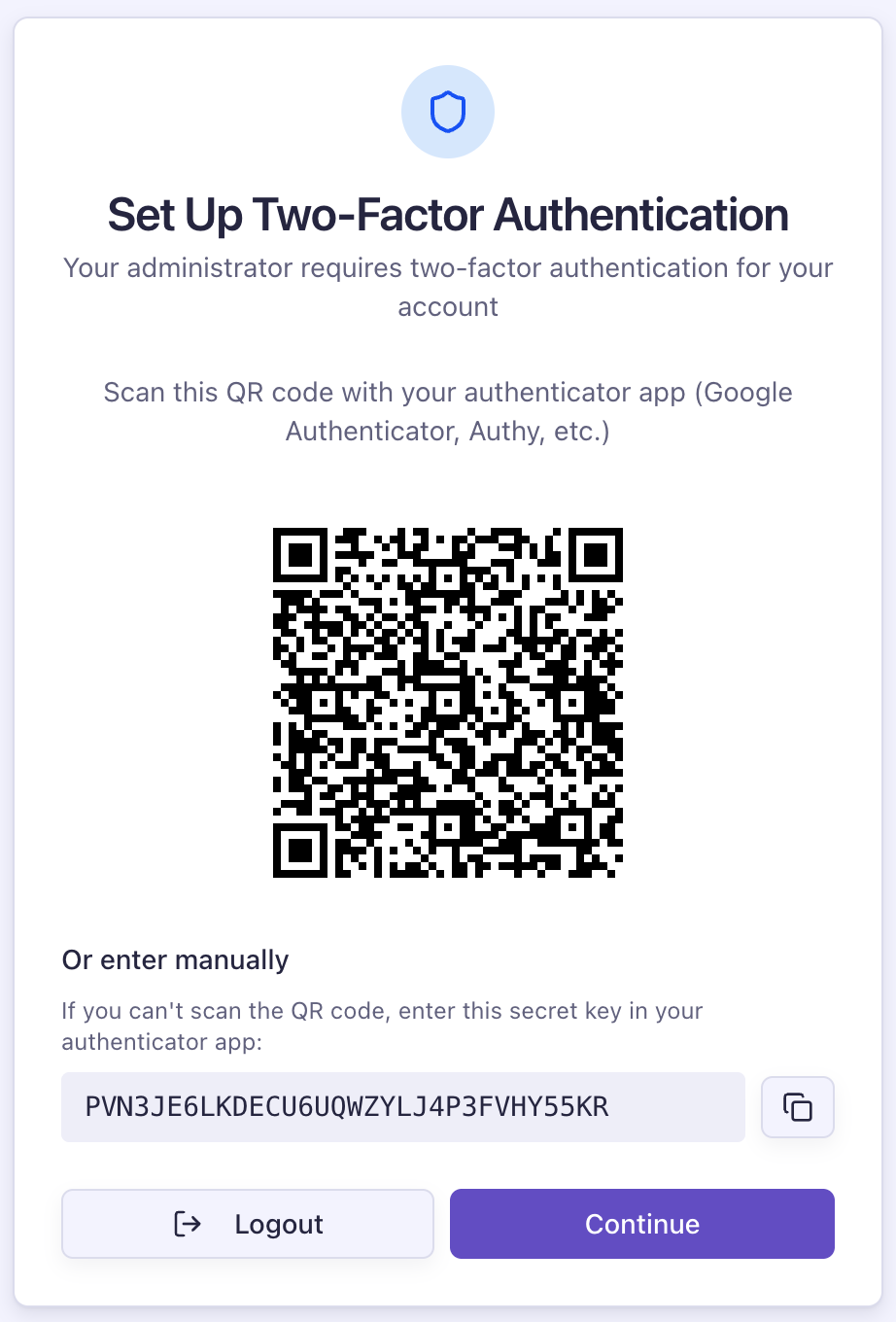
2. Scan the QR code
Scan the QR code with your authenticator app (Google Authenticator, Authy, 1Password, etc.) or copy the secret manually.
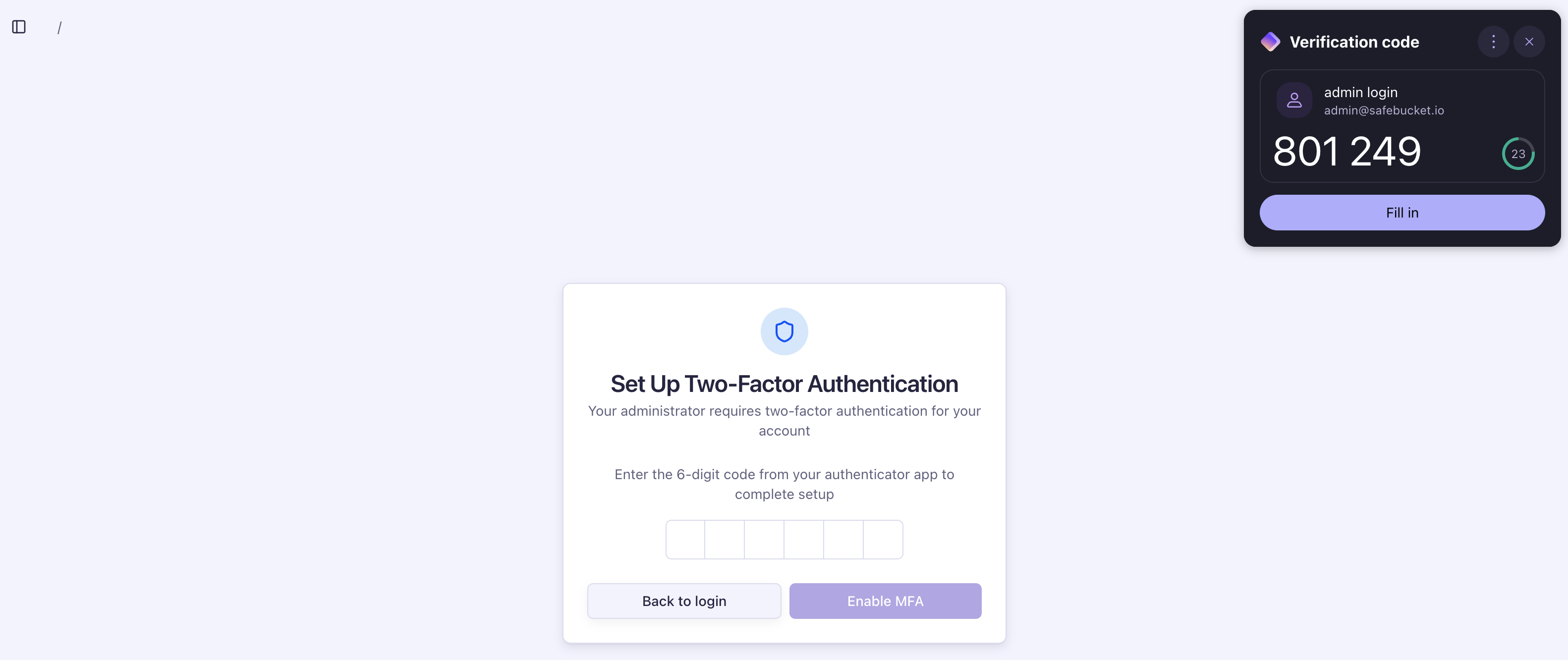
3. Enter the verification code
Enter the 6-digit code displayed in your authenticator app to verify the device.
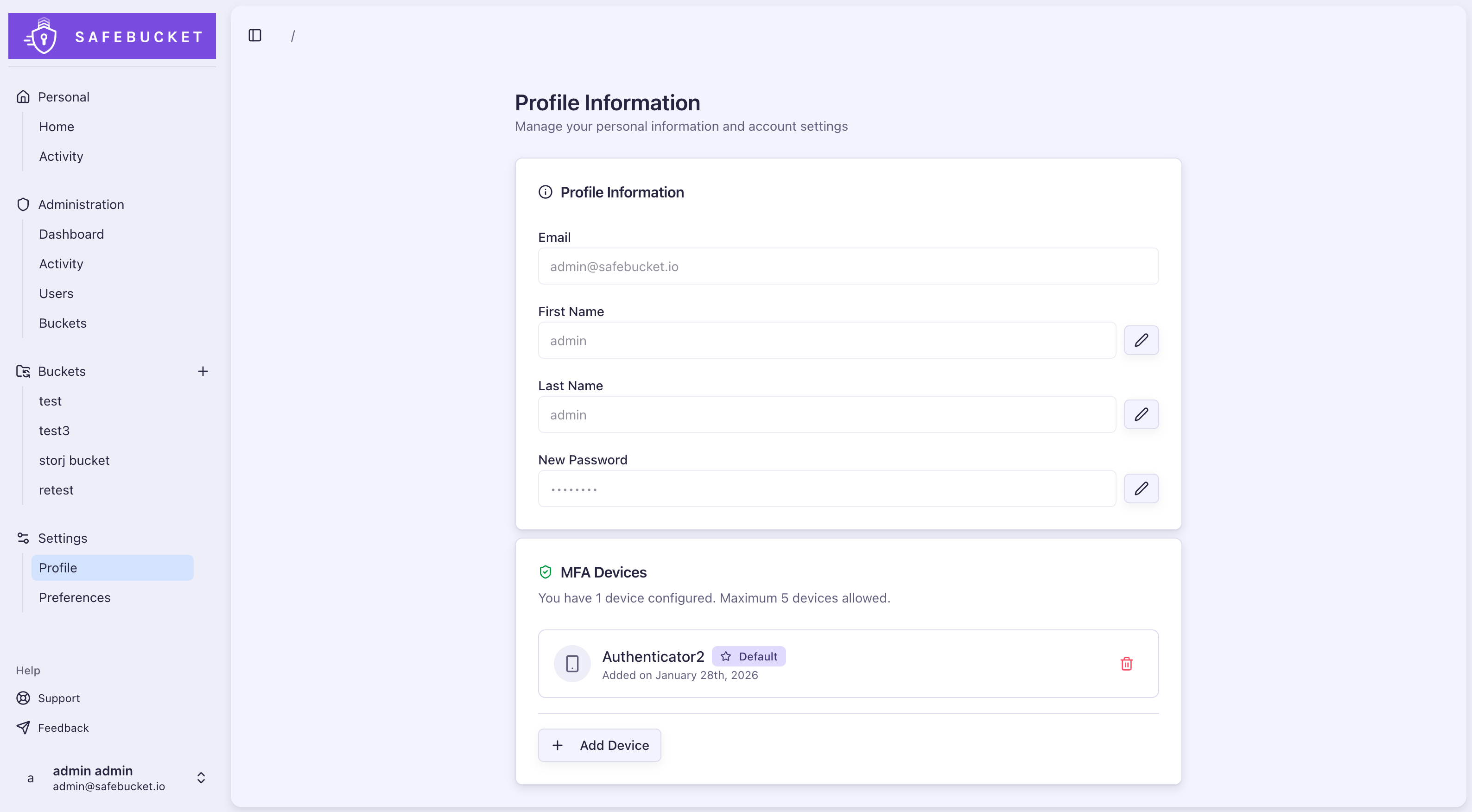
4. Device enrolled
Once verified, the device appears on your profile page. You can manage your enrolled devices from there.
Security Considerations
- TOTP secrets are encrypted at rest using AES with the configured
APP__MFA_ENCRYPTION_KEY - TOTP codes have replay protection, each code can only be used once per device
- Password confirmation is required to add or remove MFA devices
- Email notifications are sent when devices are enrolled or removed